Ask a search engine what Virginia's septic inspection law requires now, and you'll get a confident, wrong answer. Several septic-service sites will tell you that as of July 1, 2025, every home sale in the state now requires a full septic inspection before the deed can transfer. That's the version circulating on the internet right now, and it's the version a Marshall seller is most likely to encounter first.
It isn't what the law says. And in a town like Marshall, where the county itself will tell you that nearly every household draws its own water and manages its own sewage, getting this wrong isn't a small misunderstanding. It changes what a seller budgets for, how a buyer negotiates, and how long a closing takes.
What the Internet Is Getting Wrong
House Bill 2671 was signed by Governor Youngkin on March 20, 2025, and took effect July 1, 2025. It's a real law with real teeth. But read the actual summaries published by the associations that represent Realtors across Northern Virginia, and a different picture emerges than the one on the lead-generation sites selling septic pumping services.
The Northern Virginia Association of Realtors describes HB 2671 as a bill that amends the minimum requirements for septic system inspections in connection with real estate transactions and adds standards for who can perform them. The Richmond Association of Realtors and the Realtor Association of Prince William both note the same detail explicitly: buyers and sellers can still negotiate who orders the inspection, which means the law never made ordering one automatic in the first place.
What changed is the definition of what counts as a real inspection once someone asks for one.
What Actually Changed on July 1, 2025
Until July 2025, a Virginia contract could be satisfied by what agents in the industry called a walkover inspection: a visual check and a soil probe, often costing less than $100, that looked for obvious surface problems and called it done. That version no longer meets the standard. Under the new minimum requirements, an inspection has to cover every readily accessible and openable component: the septic tank, pump tank, distribution devices, treatment units, control panels, and dispersal field. Rod-and-probe reports don't satisfy this anymore.
The inspection now has to include pumping the tank, unless the buyer or seller declines that step in writing. And the inspector has ten business days to deliver a written report once the work is done. Virginia REALTORS updated its standard contract addendum for private well and septic inspections to reflect the new scope, and the association's guidance to agents flags the ten-day window specifically, because it changes how contingency timelines need to be built.
None of this makes an inspection mandatory. What it makes mandatory is thoroughness, if one happens. That's a subtle distinction with a very unsubtle effect on cost and timeline once a buyer or lender does ask for one.
Why This Lands Harder in Marshall Than in Sewered Loudoun
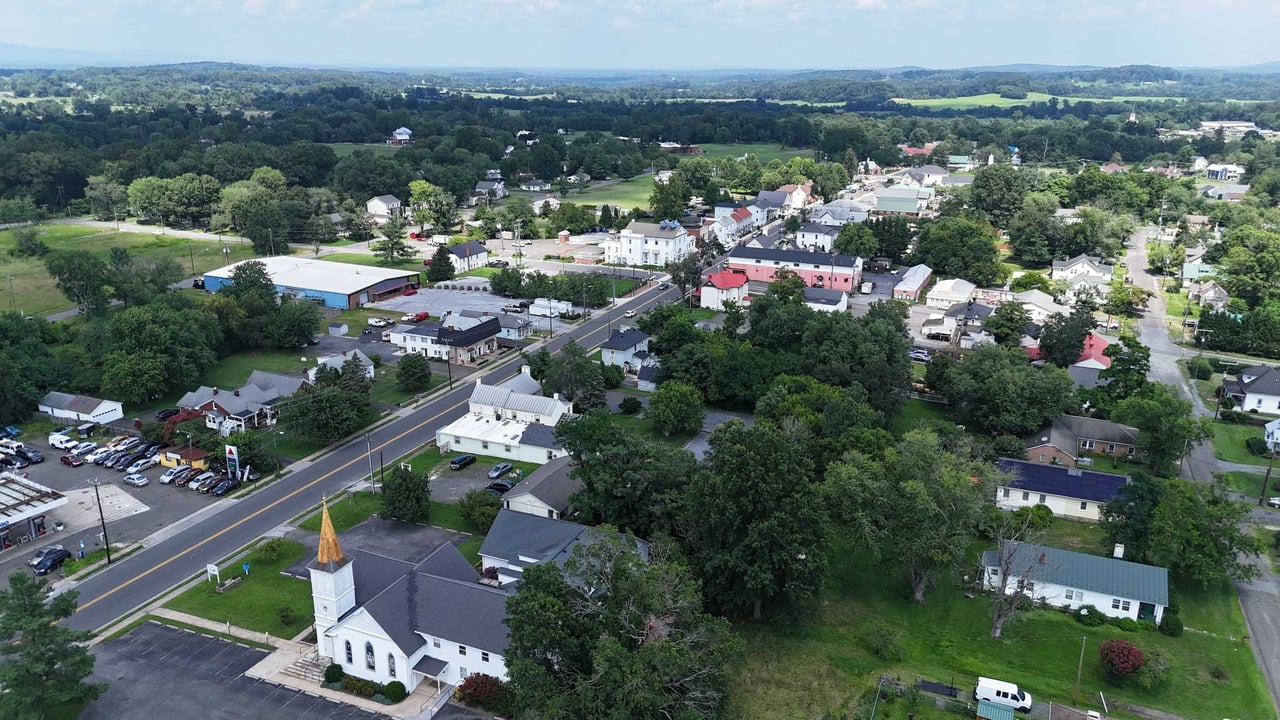
Fauquier County's own government page states it plainly: outside the Town of Warrenton, county residents rely exclusively on groundwater for their water supply. Marshall is not the Town of Warrenton. It's an unincorporated village with no public water utility and no municipal sewer connection for the overwhelming majority of its housing stock. That means the questions raised by HB 2671 aren't hypothetical here the way they might be for a townhome in eastern Loudoun tied into public utilities. In Marshall, almost every transaction touches a private well and an onsite sewage system.
Fauquier County also has its own rules layered on top of the state's, and they were in place well before HB 2671. County code requires septic tanks to be pumped at least every five years regardless of a sale. Properties with alternative or engineered systems, the kind used where conventional gravity drain fields don't fit the soil, face an annual inspection requirement administered through the county, similar to the ordinance Loudoun County adopted for the same category of systems back in 2008.
That means a Marshall seller with an alternative system may already have a paper trail: annual inspection reports filed with the county because compliance was required whether or not the home was ever listed. A seller with a conventional system has no such standing record. The system has likely never been evaluated by anyone beyond the original installer, because nothing forced it to be.
System type in Fauquier County | Existing paperwork before a sale | What HB 2671 changes at sale |
|---|---|---|
Conventional gravity system | Usually none, beyond the original installation permit | First real evaluation may happen only when a buyer requests one |
Alternative or engineered (AOSS) system | Annual inspection reports already on file with the county | Buyer's HB 2671 inspection can build on documented history |
That gap is worth knowing before you price a listing or write an offer, because it predicts where the friction shows up.
What This Means If You're Selling
If your Marshall property runs on a conventional system with no recent pump-out record, the smart move is ordering the inspection yourself before you list, not waiting for a buyer's contingency to force the question. A passing report you control becomes a selling point. A failing one you discover during someone else's ten-day window becomes a renegotiation under pressure.
A few things worth doing before you put a Marshall home on the market:
- Confirm whether your system is conventional or alternative. If it's alternative, request your existing county inspection history rather than assuming you're starting from zero.
- Locate your tank access lids and, if you can find them, your original installation permit. An inspector who has to search for either will charge more and take longer.
- Decide in advance whether you're comfortable having the tank pumped as part of the inspection. Declining requires a signed statement, and an incomplete inspection is a weaker document to hand a buyer than a complete one.
- Budget more time than the old walkover system required. A full inspection with pumping and a ten-business-day report takes longer than the $100 version that satisfied Virginia contracts before July 2025.
If you're weighing whether now is the right moment to list, our listing preparation guidance walks through the broader pre-sale checklist beyond septic and well.
What This Means If You're Buying
Buyers gain real leverage here, whether they realize it or not. A standardized inspection means a report you can actually compare against a known checklist, not a one-page soil-probe summary that varied by whoever performed it. Since the law confirms you can still negotiate who orders the inspection, it's worth raising early in your offer rather than assuming the seller will handle it by default.
Ask directly whether the property has an alternative system with existing county inspection records. If it does, request them before you pay for a new inspection that may simply confirm what's already on file. If you're comparing a handful of properties in Marshall or nearby villages, our buyer resources cover how private well and septic due diligence fits into a broader offer strategy in areas without public utilities.
A Few Direct Questions
Does HB 2671 require every Marshall home sale to have a septic inspection? No. The law sets a minimum standard for what an inspection must include if one is requested by a buyer, seller, lender, or agent. It doesn't force the request itself.
Does this apply the same way to conventional and alternative systems? The inspection standard applies to any septic system involved in a covered transaction. What differs is the paperwork trail. Alternative systems in Fauquier already carry annual county inspection records because of a separate county requirement. Conventional systems typically don't.
What happens if a buyer wants pumping done and the seller says no? The buyer or seller can decline pumping, but it has to be in writing, and the inspector's report has to note that the tank wasn't pumped. That makes the resulting report weaker evidence for either side than a complete one would be.
Is a five-year-old pump-out record enough to satisfy a buyer's request under the new law? Fauquier's own code requires pumping at least every five years regardless of a sale, but a record that old won't satisfy a buyer asking for a current HB 2671 inspection, since the standard is about the inspection performed at the time of the transaction, not history alone.
If you're buying or selling in Marshall and want to know exactly where your property's system stands before it becomes a closing-day surprise, Diana Geremia has spent nearly two decades guiding Western Loudoun and Fauquier transactions through exactly this kind of local detail. Let's connect and get ahead of it.